
Leadership in Education: What U.S. and Latin American Schools Teach Us About Building Future Leaders
Leadership in education plays a critical role in shaping the culture, direction, and effectiveness of schools. From private academies to public K–12 systems, the way leaders guide teachers, inspire students, and build learning communities ultimately determines whether schools prepare young people for the challenges of the future.
Across the world, education systems are influenced not only by curriculum standards and government policies but also by leadership philosophies. In both public and private K–12 education systems, school leadership affects teacher morale, classroom innovation, and long-term student success.
Understanding different K–12 leadership styles helps educators design school cultures that support both academic achievement and student leadership development. Three leadership frameworks frequently discussed in educational leadership research, transformational leadership, servant leadership, and autocratic leadership, offer distinct approaches to guiding schools and organizations.
However, their effectiveness often varies across cultural contexts. What works well in one region may require adjustment in another due to differences in social values, expectations of authority, and communication norms.
Comparing leadership approaches between Latin America and the United States provides valuable insight into how leadership influences educational outcomes. By examining these leadership models across cultures, educators and school leaders can better understand how to build schools that inspire innovation, strengthen community relationships, and prepare students for the future.
Transformational Leadership: Inspiring Vision and Innovation
Transformational leadership is widely regarded as one of the most influential models of educational leadership in modern organizational theory. Transformational leaders inspire followers by articulating a compelling vision, encouraging innovation, and motivating individuals to pursue goals beyond their personal interests (Bass & Riggio, 2006).
Rather than relying solely on authority or administrative control, transformational leaders create environments where teachers and students feel energized and committed to shared objectives.
Research shows that transformational leadership in schools is often associated with improved teacher engagement, collaborative school cultures, and stronger student outcomes (Leithwood & Jantzi, 2006). When school leaders encourage teachers to experiment with instructional methods, collaborate with colleagues, and participate in decision-making processes, the entire school community benefits.
Moreover, transformational leadership can appear differently depending on cultural expectations.
In Latin American countries, leadership often operates within cultural frameworks that emphasize relational authority and collective identity. Societies in this region typically exhibit higher power distance, meaning individuals often expect leaders to provide strong direction while maintaining personal relationships with those they lead (Hofstede, 2001).
Transformational leaders in Latin America frequently combine visionary leadership with a paternalistic leadership style. School principals may serve not only as institutional leaders but also as mentors and respected community figures.
Their leadership involves guiding teachers and students through strong relational connections while emphasizing collective mission and shared success. These leadership approaches align closely with cultural values that prioritize family, community responsibility, and mutual support.
In contrast, transformational leadership in the United States often reflects a more individualistic cultural orientation. American society emphasizes autonomy, innovation, and personal achievement. As a result, transformational leaders in American schools frequently focus on empowering individual educators and encouraging creative problem-solving.
School leaders may encourage teachers to develop innovative classroom strategies, adopt new technologies, and participate in collaborative leadership structures. Transformational leadership in the United States, therefore, often emphasizes intellectual stimulation and professional autonomy.
Despite these cultural differences, transformational leadership remains highly effective in both regions because it motivates individuals through a sense of purpose and vision. When educators feel inspired by a shared mission, they invest more deeply in their students’ success.
Biblically, transformational leadership echoes the example of Moses, who guided the Israelites toward a new future while inspiring them to trust in a shared vision (Exodus 3:10). Like Moses, transformational leaders help others believe in possibilities beyond their current circumstances.
Servant Leadership in Education: Leading Through Service and Community

While transformational leadership emphasizes vision and inspiration, servant leadership in education focuses on humility, service, and the development of others. First introduced by Robert Greenleaf (1977), servant leadership reverses traditional leadership hierarchies by placing the growth and well-being of followers at the center of leadership practice.
Servant leaders view their role not as commanding authority but as empowering people. They invest in relationships, encourage collaboration, and prioritize the needs of those they lead.
Within schools, servant leadership often promotes strong learning communities where teachers feel supported, and students experience a nurturing educational environment.
Research indicates that servant leadership increases employee satisfaction, organizational trust, and long-term commitment (Liden et al., 2014). These factors are especially important in schools, where teacher morale directly influences student learning outcomes.
In Latin America, servant leadership aligns naturally with cultural values that emphasize relational bonds and collective well-being. Many communities in this region prioritize cooperation and interpersonal relationships, making servant leadership particularly effective in educational environments.
School leaders who practice servant leadership frequently emphasize mentorship, ethical leadership, and personal development. Teachers often feel deeply valued in such environments because leadership prioritizes people rather than bureaucracy.
Servant leadership in Latin American schools also encourages strong partnerships between schools and families. By viewing education as a shared responsibility, leaders cultivate trust and collaboration among parents, teachers, and students.
In the United States, servant leadership has also gained popularity in leadership development programs and educational administration training. Many educators view servant leadership as a response to overly bureaucratic school systems that limit teacher voice and collaboration.
While American culture often emphasizes individual achievement, servant leadership remains highly effective because it fosters empathy, ethical leadership, and strong relationships.
The biblical foundation for servant leadership is clearly illustrated when Jesus washes the disciples’ feet, demonstrating that true leadership begins with humility and service (John 13:14–15).
Autocratic Leadership: Authority and Crisis Management
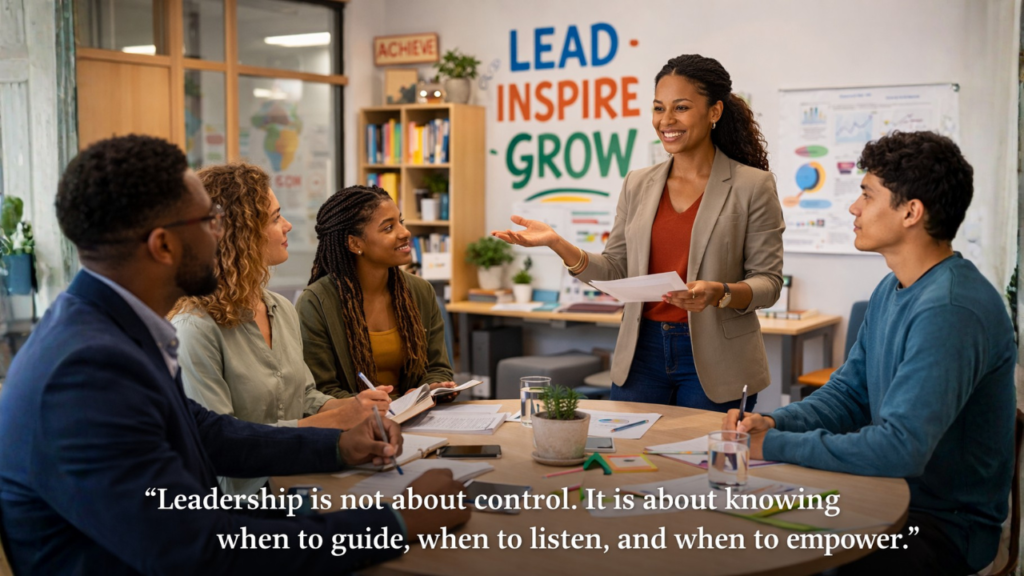
In contrast to transformational and servant leadership, autocratic leadership emphasizes centralized authority and direct decision-making. Autocratic leaders maintain control over major decisions and often prioritize efficiency and rapid action.
Although frequently criticized in modern leadership discussions, autocratic leadership can be effective in specific circumstances, particularly during organizational crises or situations that require immediate action.
In Latin America, cultural acceptance of hierarchical authority can make autocratic leadership more common within certain institutions (Hofstede, 2001). Educational leaders in these contexts may exercise stronger control over curriculum decisions, staff management, and institutional policies.
Teachers may expect leaders to provide clear direction rather than to engage in collaborative decision-making.
However, research shows that prolonged reliance on autocratic leadership can reduce employee satisfaction and weaken organizational trust (Van Vugt et al., 2004). Teachers who feel excluded from decision-making processes may experience lower motivation and professional engagement.
In the United States, autocratic leadership tends to be viewed less favorably because American culture emphasizes participation, equality, and shared governance. Many schools in the United States rely on collaborative leadership structures that involve teachers in curriculum design and school improvement initiatives.
Nevertheless, autocratic leadership can still be valuable during emergencies or major organizational transitions when quick decisions are necessary.
Biblical leadership also emphasizes the importance of balancing authority with wisdom. King Solomon, known for his wisdom in governance, prayed for discernment to lead effectively (1 Kings 3:9).
Leading in Multicultural Educational Environments
Modern schools increasingly serve diverse communities, requiring leaders to navigate multiple cultural expectations. Effective educational leadership, therefore, requires adaptability and cultural awareness.
Successful leaders recognize that no single leadership style fits every situation.
Instead, effective leadership often involves combining multiple approaches. Transformational leadership provides vision and innovation. Servant leadership builds trust and community. Autocratic leadership may provide stability when rapid decisions are required.
Leadership scholars often refer to this ability as cultural intelligence, which describes a leader’s capacity to understand cultural differences and adapt leadership behavior accordingly (Earley & Ang, 2003).
For schools operating in multicultural environments, cultural intelligence is essential for building inclusive and effective educational communities.
Why Leadership in Education Matters for the Future of Schools

Across the world, education systems face a similar challenge. Students often graduate with knowledge but without the leadership skills, confidence, and real-world problem-solving abilities necessary for the modern economy.
Research consistently shows that leadership competencies, such as communication, collaboration, critical thinking, and emotional intelligence, are among the most important skills for future success (Northouse, 2022).
Furthermore, many traditional education systems still focus primarily on memorization and standardized testing.
Schools must move beyond memorization toward future leadership education that prepares students to think critically, communicate effectively, and lead with integrity.
Institutions that embrace innovative K–12 education models are better positioned to prepare students for rapidly changing global economies.
Preparing the Next Generation of Leaders
At The Now Academy, we believe education must go beyond academic performance.
Students should develop the ability to:
- Think critically
- Solve real-world problems
- Communicate ideas confidently
- Lead with integrity
- Build resilience and creativity.
Leadership development for students should begin early, not later in college or adulthood.
Students engage in:
- Project-based learning
- Leadership circles
- Entrepreneurship activities
- Public speaking and presentations
- Collaborative problem-solving
Instead of preparing students only for exams, we prepare them for life, leadership, and opportunity.
Explore The Now Academy
If you are a parent seeking to help your child develop confidence, leadership skills, and real-world learning experiences, we invite you to explore The Now Academy.
Learn how our leadership-centered learning model prepares students to think creatively, solve problems, and lead with purpose.
What leadership skills do you believe students need most to succeed in the future? Share your thoughts in the comments or connect with us to learn more about how The Now Academy is preparing the next generation of leaders.
About the Author
Leonard J. Chaplin, known as Coach LJ, is an entrepreneur, educator, and PhD candidate in Organizational Leadership with a concentration in Entrepreneurship at Regent University. He is the founder of The Now Academy, an innovative K–12 educational model focused on developing students’ leadership, business thinking, and real-world problem-solving skills.
References
Bass, B. M., & Riggio, R. E. (2006). Transformational leadership (2nd ed.). Lawrence Erlbaum Associates.
Earley, P. C., & Ang, S. (2003). Cultural intelligence: Individual interactions across cultures. Stanford University Press.
Greenleaf, R. K. (1977). Servant leadership: A journey into the nature of legitimate power and greatness. Paulist Press.
Hofstede, G. (2001). Culture’s consequences: Comparing values, behaviors, institutions, and organizations across nations (2nd ed.). Sage.
Leithwood, K., & Jantzi, D. (2006). Transformational school leadership for large-scale reform. School Effectiveness and School Improvement, 17(2), 201–227.
Liden, R. C., Wayne, S. J., Liao, C., & Meuser, J. D. (2014). Servant leadership and serving culture. Academy of Management Journal, 57(5), 1434–1452.
Northouse, P. G. (2022). Leadership: Theory and practice (9th ed.). Sage.
Van Vugt, M., Jepson, S. F., Hart, C. M., & De Cremer, D. (2004). Autocratic leadership in social dilemmas. Journal of Experimental Social Psychology, 40(1), 1–13.
Yukl, G. A., & Gardner, W. L. (2016). Leadership in organizations (9th ed.). Pearson.